1,000+

Forest Species

100+

Forest Destinations

1,100+

Bird Species

500+

Wildlife Species

Beautiful forest in Kenya
Kenya's Living Forests
Into the Wild

Enter a World Shaped by Nature

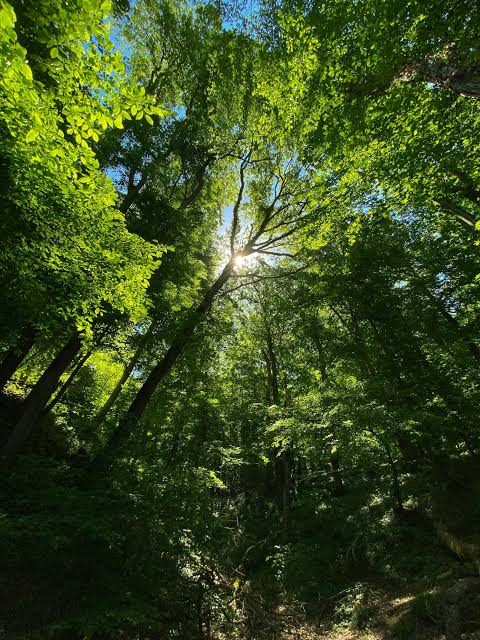
Kenya's forests are among the country's most fascinating natural treasures. From ancient indigenous forests to cool mountain woodlands, these landscapes shelter extraordinary wildlife, rare plants and remarkable birdlife.

Walk beneath towering trees, follow hidden trails, listen to birdsong and discover the quiet beauty of places where nature still leads the way.

Explore Forests
Explore Kenya

Featured Forests

Discover ancient forests, mountain woodlands and extraordinary ecosystems hidden across Kenya.

Kakamega Forest Ancient Forest
Western Kenya

Kakamega Forest

Kakamega Forest National Reserve is Kenya’s most important surviving remnant of the ancient Guineo-Congolian tropical rainforest, which once stretched across much of Central Africa. Located in western Kenya across Kakamega, Vihiga and Nandi counties, this mid-altitude rainforest is recognised for its exceptional biodiversity and importance as an evolutionary refuge. The forest is an Important Bird Area (IBA) and is home to more than 360 bird species, including the spectacular Great Blue Turaco and the threatened Turner’s Eremomela. Its wildlife also includes De Brazza’s monkeys, black-and-white colobus monkeys and blue monkeys, while its insect diversity is remarkable, with up to 400 species of butterflies and large Goliath beetles. The vegetation includes ancient indigenous hardwoods such as Elgon teak and red stinkwood (Prunus africana), alongside hundreds of other plant species, including ferns and wild orchids. Visitors can explore the rainforest through nature trails, including routes around the River Yala, climb Landa Hill for panoramic views above the forest canopy, and visit its waterfalls and other scenic sites. The forest has two principal visitor areas: the northern Buyangu sector, associated with the Kenya Wildlife Service (KWS), and the southern Isecheno sector, associated with the Kenya Forest Service (KFS) and community-based conservation activities. Kakamega is accessible throughout the year, although July–October and January–February are generally drier and more suitable for easier trail walking. The wetter months, particularly April–June and November, can make trails slippery but create exceptionally lush conditions for observing plants, orchids and other rainforest life. In essence, Kakamega Forest is a living fragment of an ancient rainforest ecosystem, combining exceptional bird and wildlife diversity, rare plants, indigenous trees, scenic trails and important conservation history in one of Kenya’s most biologically significant forests.

Explore Kakamega
Arabuko Sokoke Forest Coastal Wilderness
Kilifi County

Arabuko Sokoke

Arabuko Sokoke Forest Reserve is the largest remaining fragment of indigenous coastal dry forest in East Africa, covering about 420 km² along the Kenyan coast, approximately 110 km north of Mombasa. It was first protected as a Crown Forest in 1943 and gazetted as a Forest Reserve in the 1960s. The wider ecosystem is supported by KFS, KWS, National Museums of Kenya, research institutions and local conservation groups.

The much smaller Arabuko Sokoke National Park, gazetted in the late 1980s, lies on the northwestern edge of the Forest Reserve. The forest contains three major habitats—Mixed Forest, Brachystegia woodland and Cynometra forest—which support different plant and animal communities.

Arabuko Sokoke is internationally important for its high level of endemism. It provides habitat for rare species such as the Golden-rumped Elephant Shrew, Sokoke Bushy-tailed Mongoose and Aders's Duiker, as well as elephants, leopards, civets, baboons and vervet monkeys. Its birdlife includes the endemic Clarke's Weaver, Sokoke Scops Owl, Sokoke Pipit, Amani Sunbird and Spotted Ground Thrush. The forest is also notable for its exceptional butterfly and amphibian diversity.

The forest is ecologically connected to Mida Creek, whose mangroves provide important habitat for migratory shorebirds such as the Terek Sandpiper and Crab Plover. Despite its importance, Arabuko Sokoke faces pressure from land demand and human activities, making community involvement and long-term conservation essential. In short, Arabuko Sokoke is a critical coastal biodiversity stronghold—protecting rare and endemic wildlife, indigenous forest, wetlands and mangroves within one of Kenya's most important natural landscapes.

Explore Arabuko
Mau Forest Mountain Forest
Rift Valley

Mau Forest

The Mau Forest Complex is a vast forest ecosystem in Kenya’s Rift Valley and is the largest indigenous montane forest in East Africa, covering approximately 273,300 hectares (675,000 acres). It stretches across the western slopes of the Mau Escarpment and receives some of the highest rainfall in Kenya. It is also considered Kenya’s largest drainage basin and one of the country’s most important water towers. The forest is the source or catchment of several major rivers, including the Mara, Sondu, Southern Ewaso Ng’iro and Njoro rivers. These rivers supply important ecosystems and lakes, including Lake Victoria, Lake Nakuru and Lake Natron, making the Mau important for water supply, agriculture, wildlife and hydroelectric power. Mau supports a rich variety of indigenous trees and wildlife. Common tree species include Prunus africana, Olea capensis, Albizia gummifera, Podocarpus milanjianus, Aningeria adolfi-friederici, Strombosia scheffleri and Polyscias kikuyuensis. Its birdlife includes Hartlaub’s turaco, Hunter’s cisticola and Jackson’s spurfowl, while the wider forest ecosystem provides habitat for important species such as African elephants and mountain bongos. The forest has traditionally been inhabited by the Ogiek people, whose livelihoods and culture are closely connected to the forest. However, Mau has experienced extensive deforestation caused by logging, charcoal production, agricultural expansion and settlement. More than a quarter of its area was reported to have been cleared between 1973 and the period covered by historical assessments. The degradation of the Mau has had consequences beyond the forest. In 2008, the opening of the Sondu-Miriu Hydroelectric Power Station was postponed amid low water levels that were attributed to the destruction of the forest. The Mau has also been at the centre of major land and conservation disputes. The Ndung’u Report of 2004 identified irregular land allocations and recommended their revocation. Evictions of some settlers took place between 2004 and 2006, with another major phase beginning in 2009, making Mau conservation a significant environmental and land-rights issue in Kenya. Community conservation has also played a role. In 2005, Naiyan Kiplagat co-founded the Paran Women Group, bringing together 64 Okiek and Maasai women’s groups with more than 3,000 members. The initiative has supported tree nurseries, reforestation, water and food security, as well as environmentally friendly cooking stoves using charcoal briquettes. For travellers, the Mau offers forest scenery, birdwatching, nature walks, wildlife, photography, highland landscapes and opportunities to learn about the Ogiek and Kenya’s conservation history. Because it is a large forest complex rather than a single conventional tourist site, visitors should use authorised access points and local guides when exploring. The Mau is ultimately much more than a forest—it is a major water source, biodiversity refuge, cultural landscape and ecological lifeline for communities and ecosystems across Kenya and beyond.

Explore Mau Forest
Walking through a Kenyan forest
Walk Into Nature Discover hidden trails
Forest Experiences

Where Every Trail Tells a Story

Forest exploration is more than simply walking beneath trees. It is an opportunity to slow down, observe the details around you and experience nature at its most intimate.

Follow winding trails, discover waterfalls, listen for birds and encounter wildlife in some of Kenya's most beautiful natural habitats.

Forest Walks
Wildlife Watching
Bird Watching
Nature Photography
Waterfall Trails
Botanical Discovery
Before You Go

Forest Explorer Tips

Check the Weather

Forest conditions can change quickly. Check the forecast before setting out.

Wear Good Shoes

Trails can be muddy, steep or slippery. Comfortable hiking footwear is essential.

Respect Wildlife

Keep your distance from animals and always follow local conservation guidelines.

Leave No Trace

Take only photographs and leave the forest exactly as you found it.

Discover the Wild

Step Beyond the Ordinary

Leave the busy world behind and discover the forests, trails, wildlife and hidden places waiting to be explored.

Start Exploring